Let's be honest. We've all been there. That report due Friday? You'll start Thursday night. The gym membership you paid for? You'll go next week. Calling your parents? This weekend, for sure.Procrastination feels like a harmless time-management quirk. A little dance with a deadline. But after coaching people on productivity for over a decade, I've seen the same story play out too many times. It's not a quirk. It's a slow, corrosive habit that chips away at your potential, your health, and your happiness in ways most articles don't talk about. The real consequences of procrastination go far beyond a last-minute panic and a rushed job.They wire your brain for anxiety, shrink your bank account, and can quietly strain your closest relationships. This isn't about shaming you for being lazy—laziness is often a symptom, not the cause. This is about pulling back the curtain on what's really happening when you delay, so you can make a different choice.
What You're Up Against: A Quick Guide
The Immediate Toll: Stress, Guilt, and Worse WorkThe Sneaky Long-Term Costs No One Tells You AboutHow to Actually Break the Cycle (It's Not About Willpower)Your Procrastination Questions, AnsweredOkay, let's start with the stuff you already feel. You know the drill.
That Crushing Weight of Stress and Anxiety
The moment you decide to delay a task, a psychological timer starts ticking in the back of your mind. Researchers call this the "procrastinatory cognitions" loop. You're not free. You're carrying a low-grade, persistent worry. A study published in the
Journal of Behavioral Medicine found that early in the term, students who procrastinated had
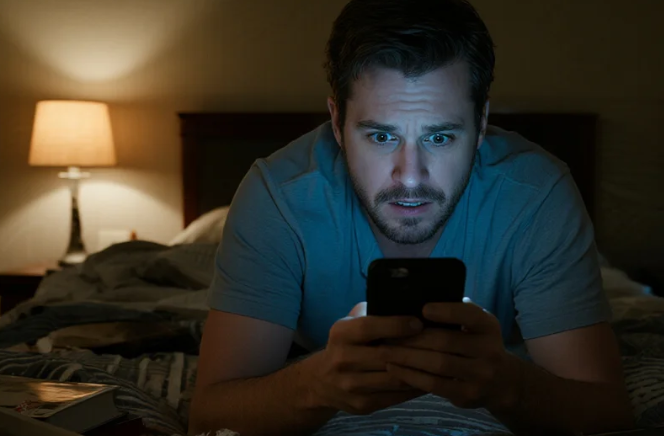
lower levels of stress. But as deadlines approached, their stress and illness rates skyrocketed far beyond their non-procrastinating peers.That "I'll do it later" creates a shadow that follows you everywhere, making it harder to truly relax during your downtime. You're on a leaky boat, constantly bailing water instead of plugging the hole.
The Quality Compromise You Can't Avoid
Here's a truth most productivity gurus gloss over: rushing almost always means compromising. It's not just about typos. It's about depth of thought, creativity, and error-checking. You skip the second draft. You don't research that extra source. You accept the first solution that comes to mind, not the best one.I've watched brilliant people turn in B+ work for years because their procrastination habit robbed them of the incubation period good ideas need. Your brain needs idle time to connect dots subconsciously. Constant last-minute work denies it that chance.
A Personal Note: Early in my career, I delayed preparing for a major client presentation. The night before, I cobbled together slides. It was technically fine. But during the Q&A, a senior executive asked a nuanced strategic question I hadn't considered. I fumbled. The answer was in my notes somewhere, but I hadn't lived with the material long enough to access it fluidly. I didn't lose the client, but I lost a chunk of their confidence. That moment cost more than any late fee ever could.
The Sneaky Long-Term Costs No One Tells You About
This is where the real damage is done. These consequences build up slowly, like plaque in an artery, until one day the flow is blocked.
The Health Tax You're Paying
Chronic procrastination isn't just a mental state; it's a physiological one. The repeated cycles of stress (delay → panic → cortisol spike → relief) take a toll. Research links habitual procrastination to:
Weakened immune response: More colds, more infections.Cardiovascular issues: Higher blood pressure from sustained stress.Poorer sleep patterns: The anxiety doesn't turn off when your head hits the pillow.Unhealthy coping mechanisms: More likely to binge-eat, drink, or scroll mindlessly to numb the guilt.You're not just putting off a task; you're putting off your well-being.
The Career and Financial Ceiling
Procrastination directly limits your earning potential and professional growth. It's not about getting fired for one missed deadline. It's about the compounded effect of:
| Missed Opportunity |
The Long-Term Consequence |
| Delaying skill development (e.g., that online course) |
You stay in your current role while peers advance with new competencies. |
| Putting off networking or updating your portfolio |
You're not top-of-mind when the dream job or project arises. |
| Procrastinating on financial tasks (taxes, investing research) |
You incur late fees, miss contribution windows, and lose compound interest. A study in Financial Services Review linked procrastination to lower savings and higher debt. |
| Always delivering "just good enough" work |
You build a reputation as reliable but not exceptional, missing out on key assignments. |
The Relationship Erosion
This one hurts the most. When you chronically procrastinate on relational tasks—making plans, having difficult conversations, following through on promises—people stop relying on you. They may not say anything, but trust erodes."I'll plan the vacation next week" turns into a rushed, expensive booking. "I'll call mom tomorrow" becomes a habit of guilt-driven calls. Your partner starts to silently take on more mental load because they can't depend on your timeline. Procrastination can be a form of passive neglect, and the people who love you feel it.
How to Actually Break the Cycle (It's Not About Willpower)
If willpower were the solution, you'd have fixed this already. The key is to hack the cycle at its root: the moment of decision when avoidance feels easier than action.
Redefine the Starting Line
The biggest mistake? Defining a task too broadly. "Write report" is terrifying. Your brain sees a mountain. Instead, break the initial step down until it feels laughably easy.Don't write the report. Just open the document and write one bullet point for the introduction. That's it. The
Two-Minute Rule (if it takes less than two minutes, do it now) is popular for a reason, but for bigger tasks, try the
Five-Minute Launch. Commit to working on it for just five minutes. Often, starting is the only barrier. Momentum takes over.
Make the Pain of Delay More Visible
Procrastination works because the pain of doing the task (boredom, anxiety, effort) feels more immediate than the pain of not doing it (future consequences). Flip that.Get specific about the cost. Literally write it down: "If I don't start my taxes today, I will likely make a mistake, owe a penalty of approximately $X, and spend my entire Saturday in panic mode next weekend." Future-you becomes real, and the abstract consequence has a price tag.
Design Your Environment for Default Action
Stop fighting yourself. Change the battlefield.
Phone in another room: The single biggest distraction source gone.Pre-commitment device: Tell a colleague you'll send them a draft by 3 PM. Now there's social accountability.Ritualize the start: Same coffee, same playlist, same clean desk corner. Signals to your brain it's work time.The goal isn't perfection. It's interrupting the automatic "I'll do it later" response just one more time than you used to.
Your Procrastination Questions, Answered
Is procrastination a sign of a deeper issue like ADHD or anxiety?It can be, but it's not always. For many, it's a learned habit reinforced by temporary relief. However, if your procrastination is chronic, paralyzing, and accompanied by significant difficulty focusing, regulating emotions, or intense shame, it's worth talking to a professional. ADHD, in particular, isn't about a lack of care; it's about executive function challenges that make initiating and switching tasks incredibly hard. Treating the root cause is different than trying to discipline a habit.I work well under pressure. Isn't that just my style?This is the most common justification I hear, and it's a trap. You're confusing
arousal with
effectiveness. The adrenaline rush of a deadline might help you focus, but it severely limits the quality parameters I mentioned earlier—depth, creativity, and error-checking. You're also conditioning your brain to only respond to crisis, which is exhausting and unsustainable. What you call "working well" is often just surviving. Imagine what you could produce with focus
and time.How do I know if I'm just lazy or actually procrastinating?Intent matters. Laziness implies apathy—you don't care about the task or its outcome. Procrastination is an
active process. You choose to do something else (often trivial)
despite knowing you'll be worse off for the delay. You care, which is why you feel the guilt and anxiety. The procrastinator will reorganize their bookshelf to avoid writing. The lazy person won't write and won't reorganize the bookshelf either. The emotional turmoil is the telltale sign.Can procrastination ever be good?In very rare, strategic cases, yes. Sometimes called "active delay," it's the intentional pause on a decision to allow for more information to arrive or for emotions to settle. The key difference is
conscious choice versus avoidance. You're not avoiding the task out of fear or discomfort; you're scheduling it for later as a strategic move. You write "decide on vendor X vs. Y after budget meeting on the 15th" on your calendar. That's planning. Most everyday procrastination lacks this intentionality.The consequences of procrastination are a silent tax on your future. They compound. But the good news is that so do the benefits of breaking the cycle. Every time you start something slightly earlier than your impulse demands, you're not just completing a task. You're rebuilding trust in yourself, lowering your background anxiety, and creating space for the quality of work and life you're actually capable of. Don't put that off.




Comments (0)
Leave a Comment